Clinical & Research
Rationale
Faster answers. Better decisions. Improved outcomes.
Explore the clinical evidence, research context, and real-world impact
driving the ISOKEM platform and its applications.
Treatment Is Time-Critical. Confirmation Is Delayed.
Bacterial infection remains a major cause of morbidity, mortality, hospitalization, antibiotic exposure, and healthcare resource utilization across nearly every level of clinical care. Infection can remain localized, disseminate into surrounding tissue, enter the bloodstream, or progress to systemic organ dysfunction, sepsis, and septic shock. This continuum of disease severity makes timely recognition and initiation of effective antibiotics increasingly consequential. In a 2017 multicenter study of 35,000 patients with sepsis, each hour of delay in antibiotic administration was associated with 9% higher adjusted odds of hospital mortality, with the strongest association in septic shock.
Current diagnostic tools for evaluating bacterial infection generally fall under three categories: culture-based technique; host-response biomarkers, such as procalcitonin, leukocytosis, and CRP; and molecular testing, such as PCR. Among these, culture remains the gold-standard for confirming viable bacterial infection and establishing antibiotic susceptibility during subsequent MIC testing, but requires microbial growth and replication and generally takes 12-72 hours to yield results. For patients with suspected sepsis or septic shock, clinicians cannot defer treatment decisions until culture results become available.
Consequently, host-response biomarkers have become a central class of tools to aid clinicians while cultures remain pending. Yet these biomarkers and host parameters reflect the host's response to physiologic stress, which can arise from infection, trauma, sterile inflammation, or severe illness. Their interpretation is derived from cohort, population-level data, and they can be elevated in a myriad of noninfectious acute conditions. Their utility therefore offers a statistical likelihood of infection rather than direct confirmation. Molecular PCR can detect and identify bacteria based on genetic material, but detection alone does not establish bacterial viability, a critical distinction in determining the need for antimicrobial treatment.
This creates a clinical dilemma for patients with suspected sepsis or septic shock: unnecessary antibiotic exposure contributes to antibiotic resistance and avoidable treatment-related harm, while clinical uncertainty drives additional consultations, investigations, and admissions. Yet delaying necessary antibiotics in true but unrecognized bacterial sepsis risks progressive organ dysfunction and death over a matter of hours. Clinicians must therefore make consequential empirical treatment decisions before an underlying infection is established. Furthermore, this diagnostic landscape leaves behind a long-standing clinical paradox where immunocompromised patients face a disproportionate disadvantage: the patients at highest risk of infection and clinical deterioration are also the same patients who are less likely to be identified with active bacterial infection.
ISOKEM Platform is introducing a new class of measurement based on a fundamentally different biological observable where bacterial metabolism itself is the diagnostic event being interrogated. This shifts the diagnostic question from microbial growth, host-response biomarkers, and bacterial genetic material.
By interrogating bacterial metabolism, we aim to measure bacterial activity in near real time. As such, several fundamental challenges are addressed:
- Diagnostic confirmation is attainable at rapid speed compared to 12-72 hours.
- Signal interpretation is orthogonally distinct, offering deterministic information of bacterial activity instead of indirect inference from host-response activity.
- Monitoring metabolic activity in near real time opens novel scientific and clinically useful questions such as leveraging kinetic patterns to phenotype pathogens, investigate metabolic response to antibiotic perturbation, and characterize disease severity for earlier surgical interventions where applicable
ISOKEM-X
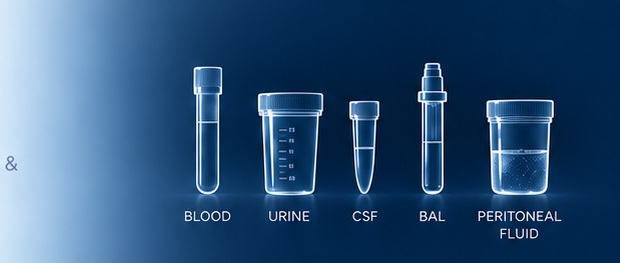
Earlier Evidence for Antibiotic Decisions
In 2021, one in three U.S. sepsis hospital encounters involving septic shock resulted in death.¹ In a study of 591 patients with severe sepsis or septic shock, hospital mortality was 22.9% when antibiotics were administered more than three hours after ED arrival, compared with 16.9% when administered within three hours.² In 2019, bacterial antimicrobial resistance was directly responsible for an estimated 1.27 million deaths globally.³
ISOKEM's rapid confirmation would support earlier initiation of treatment, directly addressing hospital mortality associated with delayed antibiotics, while enabling reassessment of unnecessary empirical treatment to reduce avoidable antibiotic exposure, treatment-related harm, and antibiotic resistance.
Healthcare Costs and Resource Utilization
Rapid bacterial diagnostics combined with antimicrobial stewardship have been associated with $2,439 lower hospital costs per bloodstream infection and $26,298 less per surviving patient in antibiotic-resistant Gram-negative bacteremia.⁸,⁴ The latter study reported 8 fewer hospital days, while a separate health system valued each avoided inpatient day at $550 in its economic model.⁹
At the hospital level, these interventions yielded estimated annual savings of $2.34 million and $2.4 million, respectively.⁸,⁴ The broader economic burden is substantial: sepsis-related hospitalizations accounted for $52.1 billion in U.S. hospital costs and 16.7 million hospital days in 2021.¹
Earlier bacterial confirmation could reduce avoidable admissions, hospital length of stay, unnecessary investigations, and associated healthcare costs.
Patient-Specific Antibiotic Response
Conventional minimum inhibitory concentration (MIC) testing depends on successful bacterial culture and isolation, inheriting the same diagnostic delays and limitations as culture itself. In a study of 325 patients with severe manifestations of sepsis, blood-culture positivity declined from 31.4% before antibiotic administration to 19.4% afterward, a 38% relative reduction.⁵ Thus, when cultures are negative, conventional isolate-based MIC testing cannot proceed.
ISOKEM-X introduces kinetic metabolic phenotyping to measure metabolic response to antibiotic exposure directly in patient-derived specimens, without requiring prior colony formation or organism isolation. This creates a pathway toward rapid, patient-specific functional susceptibility testing within the same diagnostic window as bacterial detection, rather than waiting for sequential culture, identification, and MIC testing.
Complication-Risk Assessment
The ability to track bacterial activity in near real time opens scientifically novel and clinically useful questions. Bacterial urease expressed by urinary pathogens, for example, generates ammonia from urinary urea, raising urine pH and promoting struvite crystallization, infection stones, catheter encrustation, and urinary obstruction.⁶ Yet identifying a urease-positive organism does not establish the intensity of its pathogenic activity.
ISOKEM-X aims to characterize such enzymatic flux and its response to antibiotics to distinguish aggressive, high-activity bacterial phenotypes from less active ones. This could identify infections at greater risk of rapid crystallization and urinary obstruction, informing earlier medical intervention and escalation of care, such as urologic evaluation or catheter removal before obstruction-related complications develop.
Persistent Infection and Source-Control Reassessment
Persistent infection may reflect ineffective antibiotic coverage, an infected device, or an undrained abscess, each requiring a different intervention.⁷
Through serial detection of viable bacteria, ISOKEM-X aims to identify persistent or recurrent infection during treatment. Earlier evidence of bacterial persistence could support timely antibiotic reassessment, device removal, abscess drainage, and other source-control interventions.
I-TRACE

Infection Versus Sterile Inflammation
Pancreatitis, major trauma, and postoperative inflammation can produce findings that resemble infection. Fever, tachycardia, and elevated inflammatory markers, including C-reactive protein (CRP) and procalcitonin, do not establish that viable bacteria are present.
I-TRACE is being developed to add direct evidence of bacterial activity to this distinction, supporting antibiotic decisions when the clinical picture remains ambiguous.
Infection Recognition in Immunocompromised Patients
Immunocompromised patients face a diagnostic paradox: the defenses that protect against infection also generate many of its recognizable warning signs. In chemotherapy-associated neutropenia, serious infection can progress with muted local inflammation, including little erythema or swelling.
I-TRACE targets bacterial activity rather than the strength of the immune response, with the goal of improving recognition in patients whose presentation understates their risk.
Treatment Response in Critical Care
Mean arterial pressure, serum lactate, and oxygen requirements help describe how critically ill a patient is; they do not directly establish whether viable bacteria remain.
Serial I-TRACE measurements are intended to assess whether bacterial activity decreases, persists, or returns during treatment, adding evidence when clinicians must reassess antibiotic effectiveness or investigate an unresolved infection source.
Rapid Assessment When the History Is Unavailable
An unresponsive, confused, or intubated patient may be unable to report symptoms or identify an infection source. Hypotension and altered consciousness demand immediate action but do not establish an infectious cause.
I-TRACE’s intended bedside role is to provide earlier bacteria-directed information during emergency evaluation, alongside resuscitation and empiric treatment, without waiting for culture growth.
KEMFlux

The Challenge
In extraction-based LC-MS and GC-MS workflows, measuring intracellular chemistry requires stopping activity in the sampled material, extracting metabolites, and analyzing the resulting preparation. Each additional time point requires another sample and another processing cycle.
Reaction kinetics are therefore reconstructed from separately processed samples. Capturing inhibition, recovery, or a short-lived response increases both sample consumption and analytical workload. Metabolite concentration alone does not resolve this problem: the same concentration can accompany different rates of production and consumption.
KEMFlux is designed to measure compatible biochemical reactions directly and continuously through their stoichiometrically coupled products, without repeated destructive sampling of the active system.
Research & Industrial Implications
Drug Response
KEMFlux’s drug-response application targets inhibition onset, magnitude, duration, and recovery within the same active system, supporting comparison of compounds and exposure schedules.
Cancer Drug Response
KEMFlux’s cancer-research application targets pathway responses during treatment. The objective is to distinguish functional suppression from cell loss and investigate persistent or returning activity, using reaction kinetics alongside independent viability measurements.
Mitochondrial Function
KEMFlux’s mitochondrial application targets selected oxidative reaction kinetics during drug exposure, oxygen limitation, and nutrient shifts, supporting investigation of changes in substrate utilization.
Bioprocess Development
KEMFlux’s bioprocess application targets the onset, magnitude, and persistence of reaction responses to feeding and aeration changes, supporting feed-strategy comparison and investigation of declining process performance.